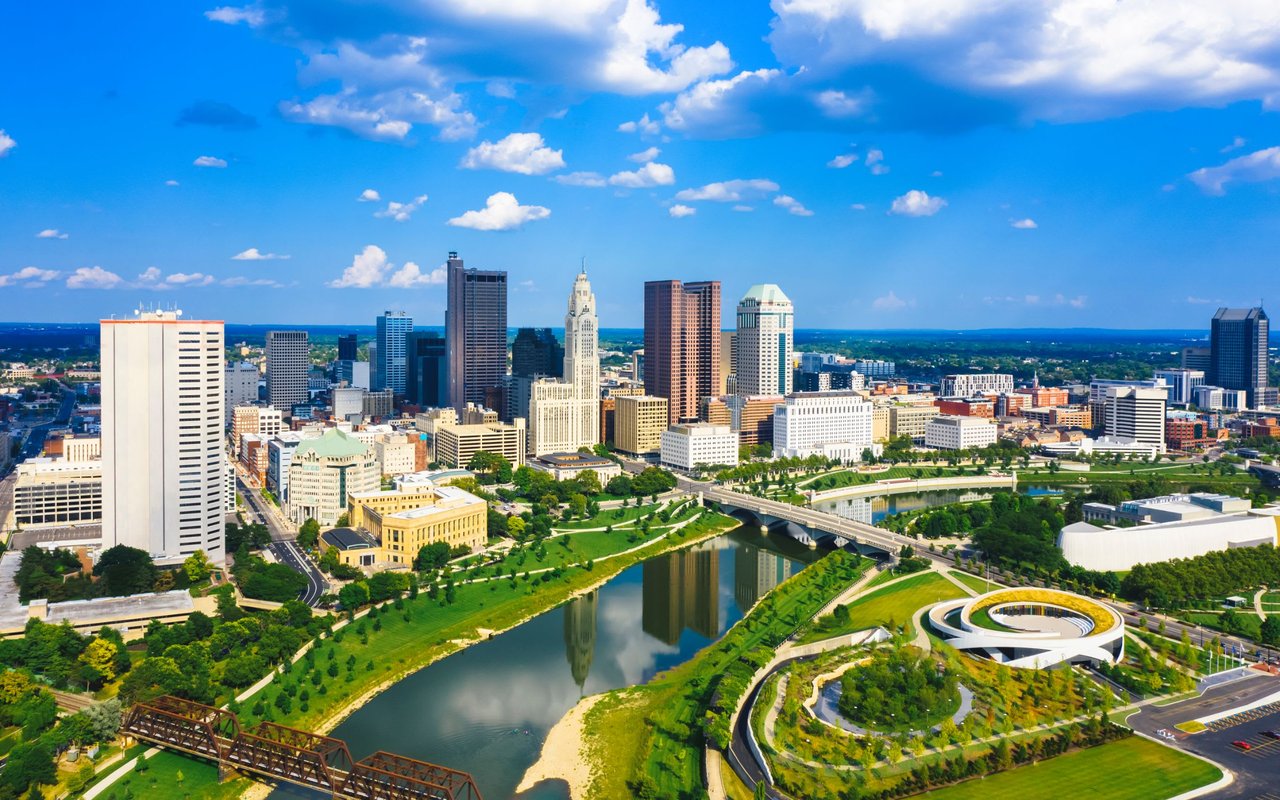
The Short North Arts District on High Street — Columbus's creative and culinary heartbeat.
I've sold homes to relocators from New York, Chicago, San Francisco, Dallas, Boston, and just about everywhere in between. And after all those conversations — during showings, over coffee, and long after closing — I've noticed a pattern: people who move to Columbus consistently say the same thing about six months in.
"I really underestimated this place."
Not in a bad way. In the best possible way. They expected a Midwestern placeholder — affordable, fine, quiet. They found something more interesting. Here's what I'd want you to know before you arrive.
The Traffic Is Not What You're Used To — In a Good Way
Let me start with the thing that affects daily life most immediately: traffic.
Columbus is a city of 900,000+ people in a metro of 2.1 million, but it does not traffic like a city that size. If you're coming from a coastal metro — New York, Boston, the Bay Area, Los Angeles — you will be actively stunned. Rush hour in Columbus is roughly 7:30–9:00 AM and 4:30–6:30 PM, and on most days, you can cross town in 20–25 minutes.
That said, there are Columbus-specific pinch points you should know about:
- I-670/I-71 interchange (the Spaghetti Stack): The interchange downtown is notoriously congested during peak hours. Avoid it if you have flexibility.
- I-270 (the Outer Belt): The northwest section, particularly between US-33 and US-23, backs up on weekday mornings. If you're commuting to the Intel site in New Albany or corporate campuses in Dublin, budget accordingly.
- High Street through the Short North on Friday/Saturday nights: Not a highway problem, but worth knowing — parking disappears and the corridor slows down when the restaurants and bars are full.
- Ohio State football Saturdays: More on this in a moment, but these deserve their own section.
The practical upside: Columbus's geography is relatively flat and its major corridors are well-designed. Once you learn the surface street alternates (Olentangy River Road to avoid Riverside Drive, Fifth Avenue to bypass High Street through campus), the city opens up in a way that genuinely changes your quality of life.
Nobody who moves here from a coastal city complains about Columbus traffic. Almost universally, it's a relief.
Ohio Winters — What to Actually Prepare For in a House
Let's be honest: Ohio winters are real. Columbus sits in a geography that delivers lake-effect influences from Lake Erie, significant temperature swings (a 40-degree difference in a single week is not unusual), and occasional ice storms that hit without much warning.
What you should actually prepare for, practically:
In a home:
- Proper insulation in the attic: Older Columbus homes (pre-1970) are frequently under-insulated. Your heating bills in an under-insulated home will surprise you. Before closing, ask about insulation depth and type.
- A good sump pump: Columbus sits on clay-heavy soil that doesn't drain well. During spring thaw and heavy rain events, basement water is a real issue in homes without proper drainage. Make sure your sump pump has a battery backup — power outages and sump pump needs tend to coincide.
- Your furnace age: If the furnace is more than 15 years old, budget for replacement. A furnace failure at 4 AM in January is a Columbus rite of passage most people prefer to skip.
- Gutters and downspout extensions: Ice dams and foundation water intrusion are both preventable with good gutter management. Extend downspouts at least 6 feet from the foundation.
In daily life:
- Get a good ice scraper for your car. A remote car starter is not a luxury in Columbus — it's a quality-of-life improvement.
- Winter in Columbus runs from roughly late November through mid-March. February is the hardest month — gray, cold, and the post-January motivation has worn off.
The flip side: Columbus springs are spectacular. The flowering trees along Bexley streets and in Schiller Park (German Village) in late April are genuinely beautiful.
The honest verdict: Columbus winters are manageable, not brutal. If you're from Minnesota or Chicago, you'll find them mild. If you're from Atlanta or Phoenix, they'll take adjustment. Either way, they're finite — and the shoulder seasons here are wonderful.
Columbus Is a 15-Minute City (In the Best Possible Sense)
One of the things relocators love about Columbus neighborhoods close to downtown is the sense of geographic compression. Everything you need is close.
In Clintonville, you can walk to Weiland's Market, grab coffee at One Line Coffee on High Street, jog the Olentangy Trail to the river, and have dinner at Philco without getting in a car. In German Village, you walk to Schiller Park, Jeni's Ice Creams on Beck Street, Schmidt's Sausage Haus on Kossuth Street, and Katzinger's Deli. In Bexley, you're a short walk or bike ride from the Main Street corridor, the Bexley Public Library, and the Capital University campus.
This "neighborhood feel" inside a large city is something Columbus does unusually well. The historic neighborhoods that ring downtown — German Village, Clintonville, Italian Village, the Short North, Merion Village, Olde Towne East — were developed before cars, which means they were built at human scale. That DNA persists.
If you're coming from a city where "walkability" is a selling point because it barely exists, Columbus's inner neighborhoods will pleasantly surprise you. If you're coming from a place like New York where everything is walkable, the comparison isn't quite that — but you'll find neighborhoods that feel genuinely livable on foot.
The Food Scene Is Not What You Expect
I'll say this plainly: Columbus has a legitimately excellent restaurant scene, and most people from other cities don't know it until they're here.
The short list of what makes it real:
- The Short North (High Street between downtown and OSU) is dense with acclaimed restaurants — Explorers Club, Veritas, Barcelona, Plank's Café, and dozens of others. On a warm Saturday evening, this corridor rivals anything in comparable Midwestern cities.
- Grandview Avenue has evolved into a serious dining destination — Starliner Diner, Local Cantina, Harvest Pizzeria, and a rotating cast of new openings.
- Italian Village is having a sustained culinary moment — multiple James Beard-nominated chefs have set up shop in the converted warehouses and storefronts along Fourth and Fifth streets.
- Jeni's Splendid Ice Creams is based in Columbus and it is genuinely as good as the hype. The Salty Caramel is non-negotiable.
- Café Brioso has been roasting exceptional coffee in Columbus for years, and the city's independent coffee scene is strong across neighborhoods.
Relocators from major food cities (NYC, SF, Chicago) are often initially skeptical. They're usually quieter about it six months later.
Ohio State — What It Actually Means for the City
If you're not from a Big Ten college town, Ohio State's presence in Columbus will take some adjusting to. If you are, you'll feel it immediately and understand it instinctively.
Ohio State has roughly 60,000 students on campus, which makes it one of the largest universities in the country. The university is essentially a city within the city, anchoring the north side of downtown and setting the economic, cultural, and social rhythm of a significant chunk of Columbus.
What this means practically:
- Football Saturdays: Ohio Stadium holds over 100,000 people. On home game days, Columbus transforms. Traffic near campus is genuinely impassable. Restaurants are packed. The city has an energy that is hard to describe if you haven't experienced it. If you live near campus (the Short North, Italian Village, OSU area), plan your Saturday around it. If you live in Bexley or German Village, you'll feel the energy but less of the friction.
- The year-round cultural calendar: OSU brings world-class performances, lectures, athletic events, and exhibitions to Columbus year-round. The Wexner Center for the Arts is one of the most important contemporary art museums in the Midwest.
- Job stability: Ohio State is one of the largest employers in the state. The university and its massive medical center (Ohio State Wexner Medical Center) provide enormous economic stability to the Columbus metro. This is part of why Columbus held up better than most cities during the 2008 recession and 2020 pandemic.
- The research and startup ecosystem: OSU's research enterprise is growing, and the university has become a meaningful anchor for Columbus's tech and biotech startup scene.
If you're moving here from a city without a major state university at its core, this will be one of the stranger adjustments — the degree to which Ohio State permeates Columbus's identity. Most people come to find it charming.
Columbus Doesn't Really Have a "Wrong Side of the Tracks"
This is something relocators from coastal cities notice almost immediately and struggle to articulate at first. Columbus doesn't have the deeply entrenched neighborhood stigmas that many larger American cities carry.
There's no Columbus equivalent of "never go south of X" or "that whole side of town is off-limits." There are neighborhoods with varying price points, varying school quality, and varying levels of development activity — but the geographic fear that's baked into cities like Chicago (South Side), Detroit, or even parts of Atlanta is largely absent from Columbus's mental map.
This matters practically: it means that emerging neighborhoods can emerge quickly, that buyers can get good value in areas that are genuinely improving, and that Columbus doesn't have the kind of entrenched segregation-by-geography that makes navigation stressful in many cities.
Areas like the Short North and Italian Village were genuinely rough 25 years ago. They're now premium neighborhoods. That cycle of reinvestment happens more openly and more rapidly in Columbus than in many peer cities.
The Job Market: Better Than People Give It Credit For
Columbus has one of the most diversified and resilient job markets in the Midwest. Major employers include Ohio State (university + medical center), JPMorgan Chase (significant Columbus footprint), Amazon, Nationwide Insurance, Cardinal Health, L Brands, Big Lots, Abercrombie & Fitch, and an expanding roster of tech and fintech firms.
The Intel investment in New Albany (a massive chip fabrication plant) has been a significant recent development that's drawing supplier companies and talent into the region. Columbus is increasingly on the national radar for tech-adjacent jobs in a way it wasn't five years ago.
The unemployment rate in Columbus consistently runs below the national average, and the city has shown genuine resilience through economic downturns. For people relocating for work, Columbus offers stability. For people moving here from high-cost markets seeking remote work in a lower-cost environment, Columbus makes particularly strong financial sense.
The Thing People Say at Six Months
Almost without exception, the people I help move to Columbus say some version of this:
"I thought it would be a temporary stop. I think I might actually stay."
Columbus isn't flashy. It doesn't have an ocean or mountains. It doesn't have the cultural cachet of New York or the weather of California. What it has is substance — good neighborhoods, strong community, excellent food, manageable commutes, affordable housing relative to comparable quality of life, and a genuine civic energy that gets more interesting every year.
People who stay here choose to. And they keep choosing to.
Thinking About Making the Move?
Whether you're relocating for a job, a family change, or just the math of cost of living — Columbus is worth taking seriously. I specialize in the neighborhoods closest to downtown: Bexley, German Village, Clintonville, Grandview Heights, Italian Village, the Short North, and the surrounding communities.
I'll tell you the truth about each one — the good, the trade-offs, and what fits your life.
Start the conversation: [email protected]
Joe Speakman is a Columbus, Ohio real estate professional who has helped buyers from across the country find their place in this city. He's happy to do the same for you.